Youth Scholarship Applications Being Accepted through Madison County Fair Board

(Brookfield, NY) The Madison County Fairgrounds Board of Directors is busy making plans for the 2012 Fair slated to take place July 12 through 15.

Over the recent long holiday weekend, five members of the Madison County Fair Board traveled to Rochester to attend the 124th annual New York State Association of Agricultural Fairs Convention At the convention it was announced that once again the New York State Association of Agricultural Fairs and New York State Showpeople’s Association are in process of accepting applications for their annual scholarship program, which will award up to ten $1,000 scholarships in 2012.

These scholarship are available to students who are New York state residents, who currently are (or have previously been) active in a fair that is a member of the NYSAAF or the NYSSA and who plan to attend (or already attend) college in pursuit of a degree.

The fair where you have been active or the NYSSA must endorse your application and will submit it for you. Madison County Fair President Jeff Mayne will gladly accept applications at the Beaver Den Diner in Brookfield or mail to Madison County Fair, P.O. Box 114, 1968 Fairgrounds Road, Brookfield, N.Y. 13314.

The deadline for applications is Friday, April 13.

For further information on the scholarship program and application forms, visit nyfairs.org/scholarship.htm; visit us at madisoncountyfairny.com.

Brookfield Teen Fighting for Life

By Martha E. Conway

(Brookfield, NY – Jan. 2012) An 18-year-old Brookfield resident is fighting for her life at Golisano’s Children’s Hospital in Syracuse after the search for a cause of her headaches revealed a brain tumor Jan. 20. Emily Salka received the news about 9 a.m. that day; 24 hours later, the first-year SUNY Oneonta student was in surgery.

Surgeons were unable to completely remove the tumor during the 10-plus-hour operation Jan. 21, but Salka’s initial prognosis was good. She had some loss of peripheral vision and several other post-operative complications. A few days later, dad John Salka said, she was sitting up in bed, cranial pressure dropping and enjoying some of her favorite television entertainment.

Last week, the pathology report delivered another blow to the still-reeling family. John Salka said he and wife Erin were told Emily has an aggressive glioma, shooting holes in the original treatment plans.

He said they were told there wasn’t much more doctors could do for their daughter.

But John Salka, who heads the Community Memorial Hospital of Hamilton’s Cardiopulmonary Department, said they will do everything in their power to save their daughter, and their next hope lies in Houston, Texas, at the University of Texas MD Anderson Cancer Center. Emily’s test results and medical records will be sent ahead of her anticipated arrival Friday.

John Salka said they hope to line up a Mercy Flight so Emily will be spared the stress of navigating a commercial flight, and so medical attendants can be readily available. According to John Salka, the minimum stay in Texas will be two to six weeks.

“We are very appreciative of the outpouring of support,” he said. “‘Surreal’ doesn’t begin to describe what has transpired within the course of a week.”

The family will be facing numerous expenses not covered by insurance; the Courier will print any information we receive regarding benefits planned on behalf of the Salkas. In the meantime, the Courier will collect donations for the family made payable to John or Erin Salka and mailed in care of the paper at c/o M3P Media, LLC, P.O. Box 3, Wampsville, N.Y. 13163.

How Cold Is It, Kate?


The Musings of A Simple Country Man

By Hobie Morris

(Brookfield, NY – Jan. 2012) Recently a lifelong Brookfielder had heard via the grapevine that I’m writing an article about the severity of this area’s often Arctic-like winters. He said when he was a boy growing up in the 1950s there was one winter morning when the thermometer had sunk to -50 degrees. All day Bob and his siblings ran across the country road from their hilltop home to a slightly warmer milk barn. The thermometer never “warmed” up a degree that day, according to Bob’s recollections.

“How cold is it, Kate?”

So went a recent early morning call to our nearest neighbor. We knew it must be very cold. In our rural Brookfield neighborhood Kate invariably has the coldest reading at their upland valley “frost pocket” home.

Eight years ago this month she replied in her always sweet voice: “It is -42 degrees.” Whatever the temperature, season or how painful her arthritic joints, Kate’s voice is always sweet, kindly and loving. Her meekness and modesty and willingness with her husband Ken to help others, is legendary in this area; a remarkable lady and family.

A Siberian cold air mass had swept in unannounced and uninvited. It would be close to a week before it returned to its frigid Arctic lair.

While rural, remote and hilly, Brookfield is south of Central New York’s main population centers, its location should never be associated with “warmth.” Year around we are many degrees cooler than Syracuse and Utica/Rome. Kate and Ken have to locate their two small gardens close to buildings to provide some shelter (and thermal mass) from the real possibility of a frost just about every month of our brief summer.

January 2004 was the coldest in our over 31 years of living in this rugged and often unfriendly climate.

My angelic and pioneer hardy beautiful Norwegian/American bride of over 46 years deserves a mountain of accolades for her true grit determination to make our Thoreauian lifestyle a reality. And this is partly why.

Our living accommodation is more like tenting. Our small A-Frame (the tent comparison) is all too accurate. In the past, especially cold weather might produce a whitish layer of frost on the inside (and outside) wall board/roof. Three heated soap stones in bed on especially cold nights. On a positive note we have no water pipes to freeze (we carry all our water in pails). We don’t worry about power lines because we have no electricity and our “outhouse” has no moving parts except when it’s -50 degrees and its occupants are in a hurry

Winter living in the old days wasn’t for the lazy. Lots of firewood had to be cut/sawn by hand. Houses were poorly heated, drafty and scantily insulated. A common insulation was old newspapers, etc. stuck in the walls, rafters, in the floor (usually between the floor boards and linoleum, etc.).

Old timers slept in cold bedrooms often with the windows open. Even with windows shut, blowing snow sifted in through the cracks in the dwelling’s porous frame. Old timers tell of waking up with a thin layer of snow covering their bedspread. Wood heat was wonderfully warming but usually only one side at a time. You had to keep turning like a rotisserie! People in those times had to be very rugged. They had to be to survive!

With “tongue in cheek” several cold temperature stories made their rounds. One time it was so cold the candle flames froze. You saved them by breaking them off and storing them in a metal box. When it warmed up you could thaw the flame to start a fire. Another tale had chimney smoke freezing like a long, tall rope. To keep your stove fire going you had to put up a tall ladder against the smoke rope. You climbed as high as you could and with a sharp axe you’d begin chopping the rope down in frozen chunks. Only when you got it cut down to the roof could your stove burn again!

In 1904 the winter was similar to our historic one in 2004. A brutal January with record snow storms and bone-rattling cold!

In mid- January, 1904, a four-day blizzard hit the area, followed by temperatures plummeting down almost out of sight. On Jan. 18 and 19 temperatures around the Brookfield village ranged from -40 to -44 degrees below zero. Neighboring West Edmeston had -48; Hamilton, -52, -while Syracuse and Watertown showed -40. Even New York City reported in at -1. A local Brookfield rumor persisted that it was so co that “Clate Linger had his ear frozen in bed.”

The unparalleled 1904 cold spell set a benchmark especially in Central New York for the remaining years of the 20th Century.

At many other times severe blizzards seriously compounded the difficulties of Central New York winters.

In March 1914 Brookfield was isolated for days by a blizzard that was compared to the famous 1888 blizzard. Huge amounts of snow and powerful winds virtually stopped all local traffic and activities. The first mail in and out was carried by Charlie Miller who snowshoed to Leonardsville and back, confirming the popular adage that “the mail had to go through” regardless of conditions.

In late January 1908, a huge blizzard blocked roads into Brookfield for several days. Even when eventually opened by hand shoveling and teams of horses, traveling remained hazardous. One day a stage driver tipped his sleigh over 12 times on his Saturday morning seven-mile run to North Brookfield.

In 1902 there were three blizzards in the first 19 days of February causing incredible havoc and disruption. A local man lamented that “one more blizzard will place us upon a snowshoeing basis of communicating with the outside world.”

Eighteen-ninety-nine was a big year in my life; my Father was born. It was also a remarkably bad record setting winter not only in central New York but throughout much of the United States; setting records that remain today. The Waterville Times noted on Feb. 17, 1899 that “1899 will go down as greater in extent and longer in duration than the famous one in ’88….It’s been called ‘The Great Arctic Outbreak of 1899′.”

Among the many weather records were these:

Snow in Fort Myers, Fla.

Lake City, Fla., 3″ of snow

Tallahassee. -2 (Feb. 13)

Miami, 29 on Valentine’s Day

Record lows set in 12 states

Ice on the Mississippi at the Gulf of Mexico (Feb. 19)

New Orleans, 7

Snow sleigh riding in Montgomery, Ala.

-12 in northern Ga.

-61, Logan, Mt.

-15, Washington D.C.

-20, Quantico, Va. (Feb. 11)

On Feb. 22, a powerful “Northeaster” moved up the East coast. By the time it was over there were over 3 feet of snow from Va. to New England.

One weather historian/meteorologist considers the 1899 “Great Storm” the worst in the country’s history. “The loss of lives, livestock, crops, etc. was enormous.”

This simple country man is sure during the next few months we’ll be calling up Kate many times before the robins return, the grass and tree buds begin to green and the crocuses begin to thrust their colorful heads up through the warming earth. By the dawn of Spring our bodies and souls will be rejuvenated by a sun that has gradually climbed higher in the lengthening daylight sky.

In six months we’ll be happily swatting away those often pesky and irritating harbingers of spring. These simple country people will happily shoo the black flies away. We welcome their presence, too.

Hobie Morris is a Brookfield resident and simple country man.


Busy Year for BRDA; Busier one Coming Up


Brookfield Riding and Driving Association news

By Karen Nowak

(Brookfield, NY – Jan. 2012) The Brookfield Riding and Driving Association, a non-profit organization, was created in September 2010 to promote the equine businesses in our area, the horse show grounds at the Madison County Fairgrounds and the beautiful Brookfield Trail System.

The Equine Industry brings in considerable money to the economy of New York state – directly through sales of horses, breeding, boarding, training and lessons; and indirectly through the many businesses it helps support such as hay (local farms), feed stores, tack stores, farriers, veterinary services, fencing, farm equipment and repairs; car, truck and trailer dealers and building supplies.

In addition, horse shows and events bring people and revenue into local stores and gas stations, restaurants and motels, bed-and-breakfasts and campgrounds. All of this translates into jobs (directly and indirectly) as well as tax revenue for our town and county.

Last, the equine industry helps ensure open spaces both for recreational use and in the purchase of farms.

The two largest segments of the equine industry are the recreational and show segments. We identified several critical needs for our area:

* The fairgrounds are greatly underutilized for equine shows and events. Bringing more shows and events to the fairgrounds will help keep the facility maintained and economically viable, as well as bring more people and business into the town of Brookfield.

* Schooling shows for ridden dressage. While there are several large United States Dressage Federation-rated shows in the central and eastern New York region, there are only two schooling shows offered in Madison County, and neither one is prior to Dressage at Saratoga or Dressage at Stockade, the main shows in which dressage riders from our area compete.

* Schooling shows for carriage pleasure driving. The exact same situation exists for carriage driving as it does for ridden dressage. There are several large American Driving Society-approved shows in the Central New York region, but not a single schooling show.

People in our area who enjoy driving their horses are reluctant to show, due to the lack of schooling shows to prepare.

* This lack of schooling shows for dressage and carriage driving is not limited to our area. Eastern and southern New York suffers a serious lack, as well, and these individuals are more than willing to travel to our area for schooling shows.

* While there are several organizations and clubs that utilize the Brookfield Trail System, it is greatly underutilized due to lack of publicity. In addition, these groups are largely unaware of the local services, hay, tack shop and local foods and produce available. Last, these groups did not have a local contact person or group to direct them to local services.

* If we are to encourage those in the equine industry to come to Brookfield, we have to have the facilities to attract them. Our extensive trail system is one draw, but without shows in a reasonable distance, we will not attract equine professionals such as breeders, trainers and competitors.

These people specifically look for areas with local shows as a place to start out their up-and-coming horses. As we lose more farms to the serious downturn in dairy farming, marketing them to equine professionals is logical action to maintain our open spaces and rural lifestyle.

We took the following actions to achieve these goals and bring more people into the town of Brookfield:

1. We joined the American Driving Society as an affiliated club to promote the equine events and businesses in our area, particularly the many carriage paths in the Brookfield Trail System.

The Brookfield Trail System has been listed in their official Recreational Driving Trail Guide, which is published nationally as well as being available via the internet.

2. We started an outreach program to those organizations and groups which utilize the Brookfield Trail System.

3. We hosted a spring fundraiser recreational trail ride from Taylor’s Tack and Field to the Moscow Road section of the Brookfield Trail System. Taylor’s Tack and Field was chosen as the starting and ending point in keeping with our mission to promote local businesses.

4. We participated in the Brookfield town-wide garage sale in June, selling baked goods made by members and other items donated by members. The proceeds were used to purchase paint and other items to renovate the interior of Horse Barn 1 at the Madison County Fairgrounds.

5. Our first major project was to completely renovate the footing of the horse show arena at the Madison County Fairgrounds. The footing had not been replaced in 20 years and had deteriorated badly over the past decade, rendering the arena unusable for the majority of equine events.

We obtained a number of estimates for renovation from professionals, which averaged between $40,000 and $50,000. Those figures were out of the question and, thanks to an allocation of $10,000 from the Madison County Board of Supervisors in June 2011, we renovated the arena ourselves, using heavy equipment from one of our members with assistance from our association members, citizens of the town, our town supervisor, two of our town councilmen and our highway superintendent, who all graciously donated many hours of their time.

The renovations were completed in time for the Madison County Fair, and we came in under budget. This project proved what can be accomplished when members of a community work together!

We heavily promoted the horse show arena renovations, and the result was the largest attendance at the Madison County Fair Horse Show in almost two decades. One of our members generously donated a number of high-quality jumps to add to the more professional appearance of the fair horse show.

6. We hosted our first American Competitive Trail Horse Association Competitive Trail Challenge using the Fairground section of the Brookfield Trail System in September to great reviews. Eight of our members completed the required training and became obstacle judges for ACTHA rides, enabling us to not only host these events ourselves, but to lend a hand to ACTHA rides in other areas.

The luncheon was catered by The Beaver Den, again in keeping with our mission to promote local businesses. Starting in 2012, this will become a semi-annual event utilizing the Fairgrounds as a starting and ending point for stabling of horses and camping for competitors.

7. We hosted a seminar in December titled “Horse Emergencies: What to Do Until the Vet Arrives” with veterinarian Rachel Fraser of Leatherstocking Equine as our speaker. The seminar was well-attended by horse owners from Madison, Chenango and Otsego counties.

8. We have begun work on a brochure for users of the Brookfield Trail System outlining the services and products that are available in this area. These brochures will be available online and at all the camping areas in the Brookfield Trail System.

9. We applied for and were accepted into the Jockey Club’s Thoroughbred Incentive Program. The Jockey Club will sponsor and award cash prizes for Thoroughbred horses at the 2012 Madison County Fair Horse Show. This will increase the “draw” of the Fair horse show and bring in competitors from a wide area of New York state.

10. We have 10 shows or events scheduled for 2012 at the Fairgrounds: two ACTHA CTC rides, three English/Western Open Horse Shows (including the Madison County Fair), one Youth English/Western Show, two Ridden Dressage schooling shows, a three-day Driven Dressage Festival and the Jeff Dye Memorial Trail Ride & Poker Run Leukemia Fundraiser.

11. We are regular contributors to Horse Bits magazine and the Madison County Courier and, starting in 2012, will be regular contributors to the Mane Stream magazine. Our events are publicized in Horse Bits, Horseman’s Yankee Pedlar, The Northeast Equine Journal, Steed Read and the Mane Stream horse magazines. This increases our coverage and advertising to all of New England, New York, New Jersey and Pennsylvania.

Karen Nowak is president, Brookfield Riding and Driving Association. She began showing hunters in her teens and later in life expanded her horizons to ridden dressage and driving.  For the past 20 years she has owned, bred and shown Hackney Horses, which are a critically endangered breed. 

Madison County Fair Open Horse Show Approved by TIP

Brookfield Riding and Driving Association News

(Brookfield, NY – Jan. 2012) We are very pleased to announce that the Madison County Fair Open Horse Show has been approved by The Jockey Club’s Thoroughbred Incentive Program. The following classes and awards have been approved:

Other Award: The Jockey Club T.I.P. Overall High Point Thoroughbred

The Jockey Club T.I.P. Thoroughbred English Pleasure W/T

The Jockey Club T.I.P. Thoroughbred English Pleasure W/T/C

Ribbons for first through sixth places and a $50 purse will be provided for each class. In order to be eligible for the purse, a class must have a minimum of three entries. A high-point ribbon, prize and $100 purse will be provided for the Overall High Point Award.

TB eligibility requirements may be found at tjctip.com/owners.asp and more information on The Jockey Club’s program may be found at tjctip.com.

If you own a TB that has been registered with The Jockey Club, mark your calendars for July 15 and come join the fun at the Madison County Fair Horse Show, 1968 Fairground Road, Brookfield.

For more information about our club, shows and events, visit brda.us.

Model ‘T’ for Two: Backing Up to Go Forward


The Musings of A Simple Country Man

By Hobie Morris

(Brookfield, NY) “It was a magic carpet, bumping over rough roads when the ruts were deep and -whizzing along when they were smooth, dry and dusty.” —Kansas City Star

Sometime early in the last century a small black automobile slowly backs up the steep dirt road that leads into this remote country village. By the time the driver reaches the valley’s summit his neck is pretty stiff from constantly craning it trying to keep his auto on the surface of the narrow road and out of the deep ditches on either side.

When at the top he turns his auto around and continues driving four miles east into
another scenic central New York valley along which runs the wider gravel Route 8 and
Bridgewater to the north and Leonardsville to the south.

Getting into Brookfield in the early days of motoring is often much easier than getting out especially if you travel up the steep eastern side of Beaver Creek Valley. It is the shortest route to easier traveled roads beyond.

But backing up? Among many of the earliest automobiles backing up steep inclines made the gasoline flow more efficiently through the carburetor to the sparkplugs. It is a “pain in the neck” but it got you up a steep hill albeit at a snail’s pace!

This black auto is not an especially good hill climber. While it can easily cruise along at 30 to 45 mph on level ground its 20 horsepower 4 cylinder 2.3 liter engine often struggles up steep inclines. Occasionally the “low” transmission bands will overheat and fail to work at all! When his happens a driver can turn the car around, press the reverse pedal and, once again, back up the hill!

Every fall for the pasts 39 years thousands of central New Yorkers have flocked into scenic and historical Brookfield to attend the very popular “Wheel Days.” The Fairground, where the event is held, is a bee hive of activity. There is plenty of excitement for everybody from early morning till long into the cool evening. The highlight of this three day event is Sunday’s appearance of a huge number of unique vehicles of every conceivable make, model, age and description. The spacious grounds can hardly hold them all and the thousands of spectators who mill around examining them. Many of these antiques are driven to “Wheel Days” under their “own steam.” Collectively they document America’s productive genius that was once the envy of the entire world.

On the most recent Wheel Days my wife Lois and I are like kids once again. As we sauntered around the Fairgrounds admiring the numerous exhibits a small black auto slowly “putt-putted” by us. We admired it and waved to the driver and his passenger.

Later we saw it parked with its hood raised and windows rolled down. We went over to it. Its engine was amazingly small as was its radiator; its interior strictly no frills and rather primitive in its simplicity. Quite a contrast to modern automobiles with their mind (and wallet) boggling complexity. We found out this black auto had been built in America 87 years ago. It was called a “Model T.” A vehicle that many claimed “changed the world.”

Unquestionably it was one of the most beloved, famous and important vehicles ever made; the first American auto to be effectively mass produced and cheap enough for the common American to purchase. It was the brain child of the auto pioneer and icon Henry Ford. (In 1914 using efficient mass production methods a Model T came off the assembly line every 24 seconds).

First some background information.

In June, 1903 Henry Ford founded the Ford Motor Company. The first production auto was a Model A (1903); a Model B (1905) followed by Models N (1906) and R and S and then the most famous to be Model T in 1908. The first T’s came in an assortment of colors and did so until 1913 when it came only in black for the next 13 years. Color options once again became available in 1927. In 1928 Ford introduced a new model, the equally famous A.

In 1921 the Model T commanded 61.6 percent of all cars sold in the US. The T was unique in many ways. Its left side steering wheel location soon became standard in the industry. Its metric auto engine was the first mass produced engine of its kind. Then there was the planetary gear system discussed later. Between 1908 and 1927 there were 15.5 million Model T’s built. Someone described the T this way: “nimble as a jack rabbit, rough as a hickory stump, simple as a butter churn, unadorned as a farmer’s boot.”

Henry Ford was a prime mover in an auto revolution unleashed in the early decades of the 20th Century. When the Model T was conceived in 1908 there were barely 300,000 autos, and 253 companies making cars, on America’s roads. By 1927 there were 20 million automobiles. Between 1913 to 1925 12.7 million sold were Model T’s.

Ford led the way in “democratizing” car ownership. The Model T was often the first auto ever owned by millions of Americans. Some have called the T the “farmer’s car.” In 1920 49 percent (42.5 million) Americans still lived on farms or “rural territory.” In countless ways Henry Ford’s invention freed the American farm family from the slavery of tedium and isolation.

The farmer’s uses of the Model T were legendary. As one farmer expressed it the T would do everything except “rock the body to sleep or make love to the hired girl.”

The Model T was very remarkable besides its affordability. The 1925 Model T touring car sold for $290.

It was for example an “all season” vehicle. It stood well off the ground with 15 inches of clearance. As author Hal Borland remembers, “It -would waddle through a foot of snow without a whimper or, if need be, a foot of mud…..I once drove 30 miles through snow 14 inches deep….It took three hours but I got through.”

There were no snow tires in those early days but there were tire chains. If caught without a pair you could wrap rope round and round the tires. Tires had wooden “artillery wheels” with spokes so one could wrap the rope that way.

Starting the Model T in the winter proved to be a never ending challenge. Radiators were usually drained every night. (Some people used kerosene for antifreeze but the smell lasted the year round). When you wanted to start it you poured boiling water into the radiator, covered the hood with a heavy blanket and waited a half an hour. If you were lucky, and had properly set two small levels on the steering wheel to advance the spark and feed the gas and had not broken your wrist, hand or arm cranking the cold engine, the T’s motor usually coughed and sputtered into life.

Winter driving in the Model T wasn’t a very enjoyable experience. There were virtually no comforts for either the driver or passengers. As Hal Borland described the scene in his book Hill Country Harvest (1967), “It was probably the coldest vehicle ever built, colder than a buggy because it went faster and had more cracks for the air to get into.” (The early T’s had no left side door; it had a folding top with side curtains that buttoned up; no heater, or windshield wipers. If you wanted to see in a storm you stuck your head out).

Model T’s had a very long life expectancy. When the last Model T was built in 1927, 75 percent of all T’s built were still on the road!

In 1914 for example Mike Tonis of Sacramento, Calif. bought a Model T. It was a 1926 Model T Coupe he saw sitting alongside a road with a “For Sale” sign on it. He asked the owner the price. The man said, “Whatever you got.” This was in the Great Depression and the man hadn’t eaten for several days. Tonis had only $5 in his pocket. Sold. Over the years he would drive that $5 auto over 650,000 miles! Tonis never spent a dime in a garage for repairs. In fact he added a second transmission behind the first that gave him nine speeds forward and three in reverse.

The first car writer Hal Borland ever had was a second hand Model T. It had been in a wreck. He bought it for $37.50, stripped it to the running gears, put in bucket seats, a big gas tank and new hood. Borland drove it 100,000 miles, sold it to a rural school teacher who drove it for five years. She sold it to a rural mail carrier who made it into a “mud buggy” and used it several months a year on the unpaved roads in eastern Colorado. Borland lost track of it after that but was sure “it didn’t die.”

Examples of the Model T’s versatility could fill a book. Its uses were endless: from pulling a field plow to supplying the power to buzz up firewood. Its adaptability had few limits!

The Model T was also very fixable. Flat tires were frequent. One could “cold patch” it on the spot and shortly resume driving. In hot weather, however, those patches tended to come loose with the inevitable result.

Many hardware stores in those days carried in stock the most frequently needed Model T parts. They were plentiful and very cheap.

Borland and most Model T owners were usually their own mechanics.

Every 1,000 miles or so, for instance, you’d pull off the motor’s head and scrape off the built up carbon. Then you’d put the head back on and you were off once again. One time Borland blew a head gasket 40 miles from town. He cut out a new gasket out of the only material at hand, a Uneeda Biscuit cracker box. It worked. He drove the T several hundred miles with that cardboard gasket!

Another man burned out two rod bearings on a lonely rural road. He replaced them on the spot with pieces of bacon rind. He drove a thousand miles with these makeshift bearings!

The planetary transmission gear set the Model T apart from all other autos of that era (and ours). The T’s had no gear shift, just three shifting pedals on the floor acting on the planetary gear. The left pedal started the auto forward in low gear. Release of that pedal placed the car in high gear. The far right pedal was the brake and the center pedal when depressed moved the car in reverse. (Transmission bands had to be occasionally adjusted and replaced when worn out). Borland recalled that when the brake pedal wore down you could use the reverse pedal for a brake).

The gas tank was under the cushion on the front seat. If you were running short of gas you could add if you had it kerosene and the motor would run. As Borland noted, “It smoked like a wood burning locomotive but it ran.”

Many “seniors” today still fondly remember ancient Model T’s that they tinkered with as teenagers. They could usually find them in junkyards, hedgerows, etc. They had been replaced by fancier, more powerful and expensive all weather vehicles.

But the nostalgic and practical charm of the T’s has remained as contagious as ever even a century after its conception.

If you seen one at the 40th Wheel Days held in September you’ll understand the Model T’s charisma and enduring charm; its qualities that this simple country man and many others look at with great envy and maybe even longing.

Hobie Morris is a Brookfield resident and simple country man.


Brookfield Trio Face Possession of Stolen Property, Additional Charges

Madison County Sheriff’s Office Blotter

Dec. 27, 2011

Salvatore Cesario, Sr., 53, of West Avenue, Canastota, was charged with driving while intoxicated and aggravated driving while intoxicated (blood alcohol content of .18 percent or greater), both unclassified misdemeanors, and refusal to take a breath test.

Dec. 28

Philip Stehle, 55, of West Linden Street, Rome, was charged with an unspecified violation of the Family Court Act.

Wendie L. Buffington, 30, of Perryville Road, Canastota, was charged with fifth-degree attempted criminal possession of a controlled substance, a class D felony; and use of fraud/deceit to obtain a controlled substance, an unclassified misdemeanor.

Dec. 29

Erik A. Rodriguez, 21, of Black Creek Road, Chittenango, was charged with violation of probation on a class A misdemeanor.

Dec. 30

Sabrina J. Gray, 20, of Ouleot Road, Brookfield, was charged with fifth-degree criminal possession of stolen property, false written statement and petit larceny, all class A misdemeanors.

Shauna R. Plows, 20, of Ouleot Road, Brookfield, was charged with fifth-degree criminal possession of stolen property, false written statement and petit larceny, all class A misdemeanors.

Joseph J. Bishop, 21, of Ouleot Road, Brookfield, was charged with fifth-degree criminal possession of stolen property, false written statement and petit larceny, all class A misdemeanors.

Heather L. Riley, 38, of Brooklea Drive, Fayetteville, was charged with petit larceny, a class A misdemeanor.

Dec. 31

Leonard M. Vincett, 41, of Main Street, Oneida, was charged with unlawful possession of marijuana.

Jan. 1, 2012

Robert J. Barton, 30, of Creek Road, Lincoln, was charged with disobeying a judicial mandate, a class A misdemeanor.

Brookfield Connected to Lincoln Administration

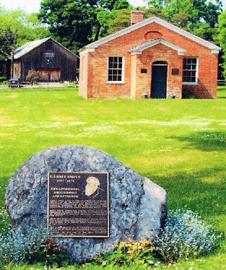
John_Palmer_Usher


Events of Historical Note

By Matthew Urtz

(Wampsville, NY) I recently had the opportunity to watch the movie “The Conspirators.” The movie concerns the story of Mary Surratt who was accused – and later hanged – for taking part in the conspiracy to kill Abraham Lincoln.

I was curious about her story in the film, and also to see if they included a gentleman from Madison County named John Palmer Usher. Unfortunately, Usher never made the film, but his story is still one that should be told.

Usher was born in Brookfield Jan. 9, 1816, to Nathaniel Usher and Lucy Palmer. His father was a general physician who could trace his family history to a number of prominent colonists including Hezekiah Usher, who was the first publisher in Boston, Mass., and John Usher, lieutenant governor of the New Hampshire Colony during the late 1600s and early 1700s.

Usher attended local schools and became a teacher; he used the money to support himself and started to study law under Henry Bennett and John Hyde in New Berlin. At the age of 21, he passed the bar. He briefly attempted a partnership with Hyde before moving to Indiana in 1839.

Usher arrived in Terra Haute, Ind., and stayed with the family of Elisha Brown, a former resident of Brookfield. He found work with a local lawyer, William D. Griswold, and received a license to practice in November 1841. The partnership, Griswold & Usher, would be prosperous for both men.

Usher worked as a trial lawyer nearly 20 years before being elected the Indiana Attorney General in 1861. His time as Attorney General was brief because in March 1862, Abraham Lincoln asked Usher to serve as assistant secretary of the Interior.

Caleb Blood Smith was serving as secretary at the time, but failing health led to Usher handling many of the duties. Blood resigned the position roughly nine months after Usher was appointed and, on Jan. 1, 1863, Usher officially became the United States Secretary of the Interior.

At that point, the secretary dealt mostly with Indian affairs. Usher favored compassionate treatment of Native Americans, a view that differed from many of his contemporaries. His time in office was for the most part uneventful, although he greatly enjoyed the ceremonial duties that came with the office. He attended the Gettysburg address and sat with dignitaries behind Lincoln as he spoke.

Usher resigned from his position March 8, 1865, effective May 15; a little more than a month later, Lincoln was assassinated. Usher kept to his timeline and finished his time serving under Andrew Johnson.

Usher did not slow down after his time in office. He took a position as the general solicitor for the Union Pacific Railway, Eastern Division. He helped promote a railroad that would go west from Kansas City.

In 1880, the railway consolidated and became the Union Pacific. He lived the remainder of his time in Lawrence, Kan., briefly serving as the town’s mayor. His home is on the National Register of Historic Places. Usher died of cancer April 13, 1889, at the age of 73 and is buried in Oak Hill Cemetery in Lawrence, Kan.

Sources: Farley, Alan W. & Richardson, Elmo R. John Palmer Usher. Lawrence, KS: University of Kansas Press, 1960. The Department of Everything Else: Highlights of Interior History (1989). cr.nps.gov/history/online_books/utley-mackintosh/interior5.htm. John Palmer Usher (1816-1889). Published by the Lehrman Institute and The Lincoln Institute. mrlincolnswhitehouse.org/inside.asp?ID=98&subjectID=2.

Matthew Urtz is Madison County Historian. He can be reached at matthew.urtz@co.madison.ny.us, (315) 366-2453 and by becoming a fan of Madison County, NY History on Facebook. For more information, visit madisoncountynyhistory.com.

Brookfield Riding and Driving Association Announces 2012 Events and Shows

(Brookfield, NY) The Brookfield Riding and Driving Association continues to line up events and shows for the coming calendar year.

Save the following dates:

May 19: ACTHA Competitive Trail Challenge, starting at the Madison County Fairgrounds into the Brookfield Trail System

For more information or to register, visit actha.us/.

May 20: Open English/Western Horse Show Series at the Madison County Fairgrounds

For more information and the prize list, contact Crystal Cowen at (315) 899-7743.

June 8 through 10: Driven Dressage Festival at the Madison County Fairgrounds

For more information and the prize list, call Karen Nowak at (315) 899-7778.

June 16: Ridden Dressage Schooling Show at the Madison County Fairgrounds

For more information and the prize list, call Karen Nowak at (315) 899-7778.

July 13: Madison County Fair Youth English/Western Horse Show

For more information and the prize list, contact Crystal Cowen at (315) 899-7743.

July 15: Madison County Fair Open English/Western Horse Show – double points show

For more information and the prize list, contact Crystal Cowen at (315) 899-7743.

Aug. 11: Ridden Dressage Schooling Show at the Madison County Fairgrounds

For more information and the prize list, call Karen Nowak at (315) 899-7778.

Sept. 8: Open English/Western Horse Show Series at the Madison County Fairgrounds

For more information and the prize list, contact Crystal Cowen at (315) 899-7743.

Sept. 15: Jeff Dye Memorial Trail Ride & Poker Run/Leukemia Fundraiser, starting at the Madison County Fairgrounds into the Brookfield Trail System

For more information or to register, contact Crystal Cowen at (315) 899-7743.

Sept. 16: ACTHA Competitive Trail Challenge, starting at the Madison County Fairgrounds into the Brookfield Trail System

For more information or to register, visit actha.us/.

Hydrofracking, Compulsory Integration and Thanksgiving

To the Editor:

(DeRuyter, NY – Dec. 2011) I have been studying this issue, gathering information and hearing testimony the past two years. Here is my summary of facts and observations:

Having read excerpts of gas land leases old and new, they are not leases as most would consider with a definitive end date. They are, in my opinion, land grabs where the property owner gives up many rights and say as to the stewardship of the land if drilling were to commence. Even the then-attorney general agrees with my assessment:

“Many of these companies use their size and extensive resources to manipulate individual property owners who often cannot afford to hire a private attorney,” said former state Attorney General Andrew Cuomo. “This land-grab practice must stop.”

Most gas land leases don’t just end on a specified date. If no drilling “operations” have started that extend the lease indefinitely, there are many hoops the property owner has to correctly go through in hopes of maybe ending the lease.

For example, the original gas company you signed a lease with may have sold its interest or parts of it not having to notify you of this. One property owner had six different companies with a vested interest that he had to send a letter of termination to each within a window of time at the supposed end of his contract. He had to go to the County Clerk’s Office and research who all had a lien on the deed to find the six companies. If he missed notifying one, his contract would have extended.

I have seen talking points for gas sales people instructing them to purposely deceive and avoid certain topics when selling these land contracts.

I have struggled with the risks, ( i.e., town of Brookfield incident, Bradford County, Penn., real horror stories and Vosberg Road, October 2010), company’s handling of issues and lack of cooperation, problems obtaining loans or refinancing if a gas lease contract exists or with your neighbors, violating some mortgage contracts if you sign a gas lease, homeowners policies excluding pollution liability if something goes wrong, the industry being exempt from key components of the Clean Air and Drinking Water Act, 70 percent or more of the water and deadly cocktail solutions remaining in the ground after companies leave, property right issues over the compulsory integration law and a host of other issues.

I took an all-day trip down to Pennsylvania recently south of Wilkes Barre, stopping in small-town cafes, asking people about their thoughts regarding this matter. I found that a lot of people who signed leases regretted it, not wishing to renew their leases knowing what they know now.

One thing is for sure where I went: the issue has divided communities and even a local church. I haven’t made up my mind “totally,” but I personally could not sign a gas lease. I could not risk my neighbor’s water supply, be a venue for the gas company to encroach upon their property through compulsory integration and destroying the peaceful tranquility we now enjoy and treasure with hundreds of semi trucks coming and going, along with a compressor running around the clock.

The bigger issue is does it rise to the level of being a public safety concern that necessitates government to ban if not restrict the practice of natural gas hydrofracking? The latter is definite. I believe the ban should affect watershed areas for sure.

If counties or towns want to legislate banning the practice, they should be allowed to do so. It will be interesting to see how this plays out in the lawsuit with the town of Dryden, where a ban has been passed and the gas industry is suing them, saying it is unlawful to do so, having no jurisdiction on the matter.

We have a lot to give thanks for here in Madison County. We live in a country that is still free where government and industry cannot silence free and virtuous people. We were given by our founding fathers a republic. Benjamin Franklin said, “A republic, madam, if you can keep it.”

Keeping that republic requires respect for the values that contributed to this now two-century-old experiment where unalienable rights come not from government but from Divine Providence and therefore cannot be taken way. That’s the idea anyways.

Man has slowly been eroding those values and rights, thinking a few intellectual elite know better how to manage our lives, property and economy. Though some of us will have differing opinions on issues, may we act with God’s love in our hearts toward one another as the democratic process on display seeks to minimize man’s vices and maximizes our respect for one another.

Shawn Skeele, DeRuyter

Old Man Winter Has Never Been So Popular: The Central New York Region Makes the Most of the Cold


(Dec. 2011)

Although snowfall has been scarce so far this winter, it’s sure to come, and when it does, we’ll be more than ready for it. After all, the Central New York Region offers the very best of New York State, especially when it comes to snow play – from downhill and cross-country skiing, to snowshoeing and tobogganing, to ice skating, ice fishing and snowmobiling.

Families are invited to bundle up and head over to the McCauley Mountain Ski Area in Herkimer County’s Adirondacks. Known as “New York’s Best Family Mountain,” McCauley offers skiers and snowboarders two dozen trails of fun ranging from gentle cruisers for beginners to steeps and glades for thrill seekers. With views to the High Peaks from its 2,300 ft. summit and miles of groomed cross-country ski and snowshoe trails, McCauley is the most affordable and accessible Adirondack resort. A ski school, ski shop and cozy chalet with a restaurant and lounge complete the whole ski area package.

Glimmerglass State Park, overlooking Otsego Lake, the infamous “Glimmerglass” of James Fenimore Cooper’s Leatherstocking Tales, is located just outside the village of Cooperstown. With its rolling, partially wooded terrain that’s host to a wide variety of wildlife, the park offers the perfect adventure for the whole family. While tubing is wildly popular here, the landscape is excellent for cross-country skiing, ice skating, snowshoeing, snowmobiling and ice fishing, as well. An uphill trail through the forest offers a spectacular view of Otsego Lake, while the Beaver Pond and Woodland trails are picturesque in their own rite.

Another scenic area to admire the romance between Mother Nature and Jack Frost is the Landis Arboretum, a public garden on 548 acres and six miles of hiking trails overlooking the Schoharie Valley. Forty acres feature trees, shrubs, and perennial plants from around the world while the remainder of the property consists of woodlands and open fields, ideal for cross-country skiing and snowshoeing.

Smack dab in the middle of the region, Chenango County encompasses more state land than any other county besides the Adirondack Park. Snowmobilers are welcomed to hop on their Arctic Cats for 150 miles of State Corridor Trail spanning to the north and east, used exclusively for snowmobiling. For cross-country skiers, snowmobilers and snowshoe fans, Bowman Lake State Park has 660 acres of snowy nature trails.

For cross-country skiing in Greater Binghamton, the combined trail system at Greenwood Park is approximately 5.5 miles and includes groomed trails for beginners all the way up to the expert skier. Additional winter facilities include toboggans, snowshoes and a warming room to melt the icicles off guests’ noses between trails. There are plenty of routes for snowmobiling as local clubs groom challenging trails throughout the county each year, like the BC Sno Riders and Ridge Riders Snowmobile Club. Fantastic ice skating rinks in the area include the Broome County Veterans Memorial Arena, Broome Community College Ice Center and the Chenango Ice Rink.

The 13-mile-long Stoney Pond Nordic Ski Trail in Madison County presents awesome trails through woodsy wonderlands. Snowmobiling fanatics are invited to dive into the powder at Brookfield State Forest, where a highly acclaimed 130-mile horse and snowmobile trail system navigates across 13,000 acres of Beaver Creek, Brookfield Railroad and Charles E. Baker State Forests. Home to interesting terrain and a wide variety of wildlife species, the forest provides families with the perfect winter wonderland setting for their recreation of choice.

For cross-country skiing in Madison County, the Great Swamp Conservancy in Canastota, Madison County’s only nature center, boasts several miles of skiing and snowshoeing trails through forests, fields and swamp.

The Val Bialas Ski Center in Oneida County offers guests night skiing, snowboarding, plus a quaint ski chalet complete with a snack bar and double-sided fireplace to thaw out next to. For the downhill skier, there are five trails at different degrees of difficulty, a sledding hill for those who prefer tobogganing and seven miles of groomed cross-country trails with varying degrees of difficulty. With 540 miles of trails, Oneida features exceptional lodging with direct access to snowmobile trailheads from the property, like Inn at the Beeches and Headwaters Motor Lodge.

Also, Boonville presents the Boonville Snow Festival and Vintage Sled Races every year and was recently named the sixth snowiest city in the US by the Weather Channel.

The Central New York Region has the best of all four seasons, and winter is no exception. Snow sports enthusiasts are encouraged to grab their skis, skates, sleds, snowshoes and snowmobiles and make the most of the region’s serene, frosty surroundings.

For more details concerning the Central New York Region, or to plan your snow-day getaway, visit JustGoCNY.com.

A Christmas Rose

Musings Christmas 50 2011


Illustration by Hobie Morris.

The Musings of A Simple Country Man

By Hobie Morris

(Brookfield, NY – Dec. 2011) Christmas is love in action. Every time we love, every time we give, it’s Christmas. – Dale Evans Rogers

Is the following Christmas story about a single red rose true? You’ll have to decide as you read this beautifully touching reminder of the true meaning of Christmas.

We shall return for a moment to an America and World that has just ended a long and horrific War. It’s the first peacetime Christmas in many years.

The holiday excitement is like an electric current sparking and surging through the huge crowd rushing through New York City’s Grand Central (Railroad) Station. Even the deafening thunder and screeching of constantly arriving and departing trains could hardly be heard over the incredible din of thousands of people flocking to their Christmas destinations.

A tall handsome young Army Lieutenant nervously looks up at the huge, oval overhead clock. It’s almost time. He stands, carefully straightens out his dun color officer’s uniform. He anxiously scans the elbow to elbow Christmas throng as it swirls around him. Would she show? The girl has promised and will be wearing a single red rose on her coat’s lapel.

Lt. John Barton’s interest in this special girl began almost two years before. He was home on furlough just before his overseas deployment. One afternoon while browsing through the shelves of a small used bookstore he saw a small, blue covered book of inspirational sayings. He thumbed through it. On the margins of almost every page were delicately written thoughtful and insightful comments. On the flyleaf in the same handwriting was the name “Coleen Jones” and her street address, but no city. Intrigued and fascinated by this unexpected discovery John decided to find out where Coleen lived. After some library and telephone company searching he found it was New York City.

It took some time to decide but one day he worked up his nerve to write a letter to Coleen. He told her briefly about himself and would she like to write him. Just before his furlough was up a note from hr arrived. Yes, she would.

John and thousands of other GI’s were soon packed in troopships heading in well protected convoys across the U-boat infested Atlantic to Europe.

Many of Coleen’s letters crossed the Atlantic in the next 18 months. Their letters slowly began touching each other’s hearts. A wartime romance began to deepen and blossom.

From a trench somewhere in France John scribbled a hasty P.S. to a dirt smudged letter. Would Coleen send her photo so he could carry it in the lining of his helmet? Her answer was always the same. If John loved her, how she looked really didn’t matter. But of course John still wondered.

Finally the war in Europe ended. Slowly American troops began returning home.

In his last letter to Coleen John asked her if she would meet him on a certain day and time when he got home. Her hasty reply reaching him just before his return troopship left a French port. She said she would and would wear a red rose on her coat to identify somebody John had never seen in person.

Eventually John got home and the agreed upon day, time and location finally arrived.

John continues to search the holiday crowd for a young woman wearing a red rose. It is Christmas Eve, the strains of familiar seasonal songs calming balms for harried lasts minute shoppers and those hoping to get home in time for eagerly anticipated reunions.

Suddenly a tall, slim, beautiful young woman appears and approaches John. Her blonde hair is carefully layered back in curls from her delicate ears. Her eyes are sky blue, her skin like an alabaster statue. Her lips are ruby red. She is absolutely stunning. She is wearing a Christmas green coat but no red rose is attached

“Going my way, soldier,” she cooed, winking at him as she slipped past, heading towards the nearby exit. John wants to follow but he hesitates confused, bewildered, wondering.

Then John sees her—standing nearby. She is past 40, gray hair tucked up under a wool cap. She has a pale, full face—a kindly smile, warm twinkling grey eyes. Her frame is stout, some might say matronly. She has a bright red rose hastily pinned to her threadbare cloth coat. She looks at John quizzically.

John extends his right hand to her. The red rose identifying her as the love of his dreams. His other hand holds the blue covered book that began this love story.

He straightens his broad shoulders, raises his right hand and salutes.

“Hello,” he begins. “I’m John Barton and you must be Coleen.” (He prayed his voice would not betray his disappointment).

She smiles at him. (Unspoken thoughts quickly flashed through his mind. It wasn’t the love he had dreamed about for so long, but it might somehow be even a more precious friendship that God in His mysterious ways had planned all along).

“I’m so happy at long last to meet you….Would you care for some dinner?” John steps closer.

The matronly, but kindly woman touched the red rose on her rumpled coat. She spoke in a pleasant voice.

Why, young man, I don’t know what this is all about. A few minutes ago a pretty young lady wearing a fancy green coat stopped me and asked me if I’d wear the red rose for a spell. She pointed you out. She said if you should ask me out to dinner she would be waiting for you in the restaurant across the street. She told me it was some kind of special test.

The lady carefully gave John the red rose. Coleen waiting for him.

As Houssaye has written: “Tell me who you love and I will tell you who you are.”

Isn’t this the true meaning of Christmas? Loving those among us who desperately need it? Isn’t love the most precious and valuable gift we can give and receive? How we respond indeed tells who we really are. And this love story really began in a humble stable over 2,000 years ago.

Hobie Morris is a Brookfield resident and simple country man.